


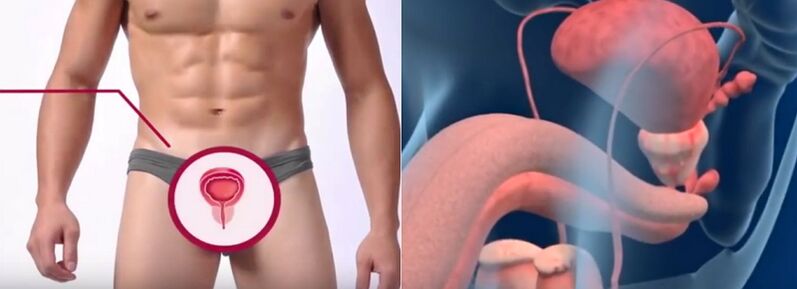
Under prostatitis, urologists understand inflammatory processes in the prostate gland that occur for various reasons.The prostate belongs to the genitourinary system and is surrounded by other organs and tissues, so the symptoms, especially in the initial stage, do not allow to identify the disease.Let's try to understand what are the first signs of prostatitis, which can indicate the beginning of the disease and tell you where to turn for help.
Signs of chronic abacterial prostatitis
The disease occurs due to damage to the prostate tissue or due to the influence of a number of other factors:
- sedentary lifestyle and concomitant blood microcirculation disorders;
- reflux of urine in the prostate gland;
- narrowing of the lumen of the urethra due to a tumor, stone or inflammatory process;
- sharp contraction of the pelvic muscles;
- hypothermia, smoking, alcohol abuse.
Symptoms of this form appear gradually, their severity increases with time.At the beginning, men may complain of frequent urges to urinate, accompanied by a burning sensation in the area of the urethral opening.
At this stage, prostatitis can be confused with urethritis, so laboratory diagnosis is important.
As the inflammatory process progresses in the tissues of the prostate gland, other signs of the disease appear:
- urge to urinate at night;
- pain in the perineum (may radiate to the head of the penis, anus, thighs and lower abdomen);
- lack or weak erection;
- pain during ejaculation;
- increase in body temperature to 37.5-37.8 °C.
If the integrity of the prostate tissue or adjacent areas of the urethra is impaired, blood in the urine or semen may be observed.The male pays attention to small scales of red or brown color.
Signs of acute bacterial prostatitis
Bacterial prostatitis is caused by pathogenic and opportunistic microflora.Microorganisms can live in the gut or on a person's skin;if the rules of hygiene are not followed, they can penetrate the prostate through the urethra and quickly develop in the tissues of the gland.Another option is the penetration of the pathogen into the urethra and further into the prostate during unprotected sexual intercourse.It is also possible to get infected with an improperly performed prostate biopsy.
Once on the mucous membrane of the prostate gland, the bacteria develop rapidly, the colony grows literally in 2-3 days.The first signs of prostatitis in this case will be:
- chills, fever, elevated body temperature;
- pain in the perineum, lower back, or lower abdomen;
- urination disorder (pain, intermittent stream of urine, frequent urges).
Without treatment or incorrect treatment tactics, the disease will progress.After a few days, constipation, acute urinary retention, pain in the muscles, joints and lymph nodes may appear.Signs of intoxication are also possible - nausea, vomiting, weakness.
The interval between the first symptoms and the most vivid clinical picture can be 3-4 days.
Signs of chronic bacterial prostatitis
The chronic form of bacterial prostatitis occurs due to improper treatment of the acute course, as well as due to bladder injury and improper catheterization.It is possible for the inflammatory process in neighboring organs to move to the prostate gland.
A person can miss the first signs of chronic prostatitis - the symptoms of this form are characterized by mild severity, periods of remission are possible.The disease can be suspected based on the following symptoms:
- problems urinating;
- dull, aching pain in perineum;
- erection problems.
Periods of exacerbation alternate with lulls.One can mistakenly think of healing and not see a doctor.This attitude is dangerous - the inflammatory process progresses, the prostate tissue degenerates and the organ loses its functions.As a result, prostatitis can lead to infertility and cause sepsis - blood poisoning.

Clinical manifestations of pathology
Prostatitis has no characteristic signs;it can be confused with other diseases that have similar symptoms - cystitis, urethritis, chlamydia.
Knowing the first signs of the disease will not help to make an accurate diagnosis.It is more effective to pay attention to clinical manifestations.
Acute bacterial prostatitis is characterized by the following signs, which are detected during examination and laboratory tests of urine and blood:
- the body temperature in the anus is 0.5 °C higher than the temperature in the armpits;
- increased number of leukocytes in the urine;
- decrease in the number of eosinophils;
- elevated C-reactive protein;
- an increase in the level of PSA in the blood.
A blood test for the content of PSA is not mandatory, but it helps to get a clearer picture of the pathological process.
How to give first aid and who to turn to for treatment
Prostatitis refers to diseases that do not threaten the patient's life in the initial stage.In severe pain, you can take painkillers, but this is an exception to the rule.It is better not to take such pills so as not to blur the clinical picture and prevent the doctor from making a correct diagnosis.To fight the high temperature, you can take antipyretics.
With a competent approach, first aid is provided in a medical facility.To do this, a man should contact a urologist at the place of residence or stay.If for some reason it is impossible to visit a doctor yourself, you should call an ambulance.
It is strictly forbidden to take antibiotics yourself.
These drugs are prescribed taking into account the type of pathogen;uncontrolled use can increase bacterial resistance and worsen the manifestation of intoxication.
Consequences of ignoring the first signs
Most men prefer not to see a doctor, especially when it comes to problems in the genitourinary system.This attitude can be dangerous.Prostatitis is a serious disease and can cause negative consequences:
- transition to a chronic form, which is practically incurable;
- development of infertility;
- spread of infection in nearby organs;
- reduced potency;
- the onset of sepsis.
The latter condition directly threatens the life of the patient.The probability of death is 30-50%, and every hour of delay in medical assistance increases this value by 8%.
Let's summarize
Knowing the first signs of prostatitis in men helps to suspect problems in the body.A more accurate diagnosis is made on the basis of instrumental research and results of laboratory tests of blood and urine.Prostatitis can threaten a man's life, so self-medication is unacceptable.If you postpone the visit to the doctor, the disease can become chronic, which is very difficult to cope with.